Co-authored preprint · arXiv:2607.21683
The LIFE science case
A community science case for a large space-based mid-infrared nulling interferometer, with terrestrial-exoplanet characterization as its central goal.
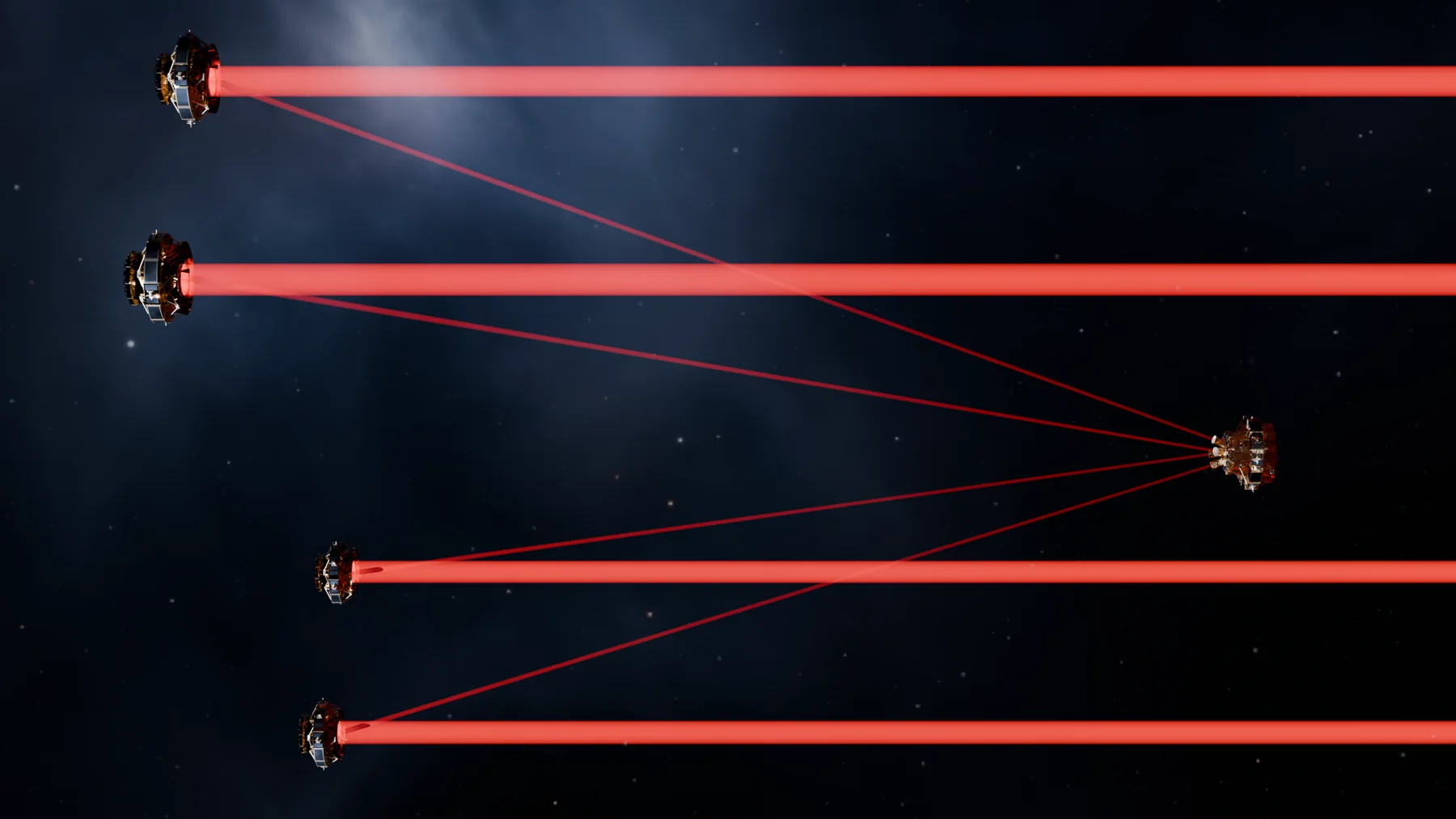
Mission overview
Mid-infrared observations of nearby terrestrial exoplanets.
In the mid-infrared, a space interferometer can search nearby terrestrial exoplanets for atmospheric gases, temperature structure, and combinations of features that help distinguish living worlds from plausible false positives.
The white paper develops a broad science case for LIFE: terrestrial-exoplanet discovery and characterization at its center, with a wider astrophysics program enabled by high angular resolution and cryogenic infrared performance.
My role
Co-author of the LIFE science case.
I am a co-author of the 2026 LIFE community science-case preprint.
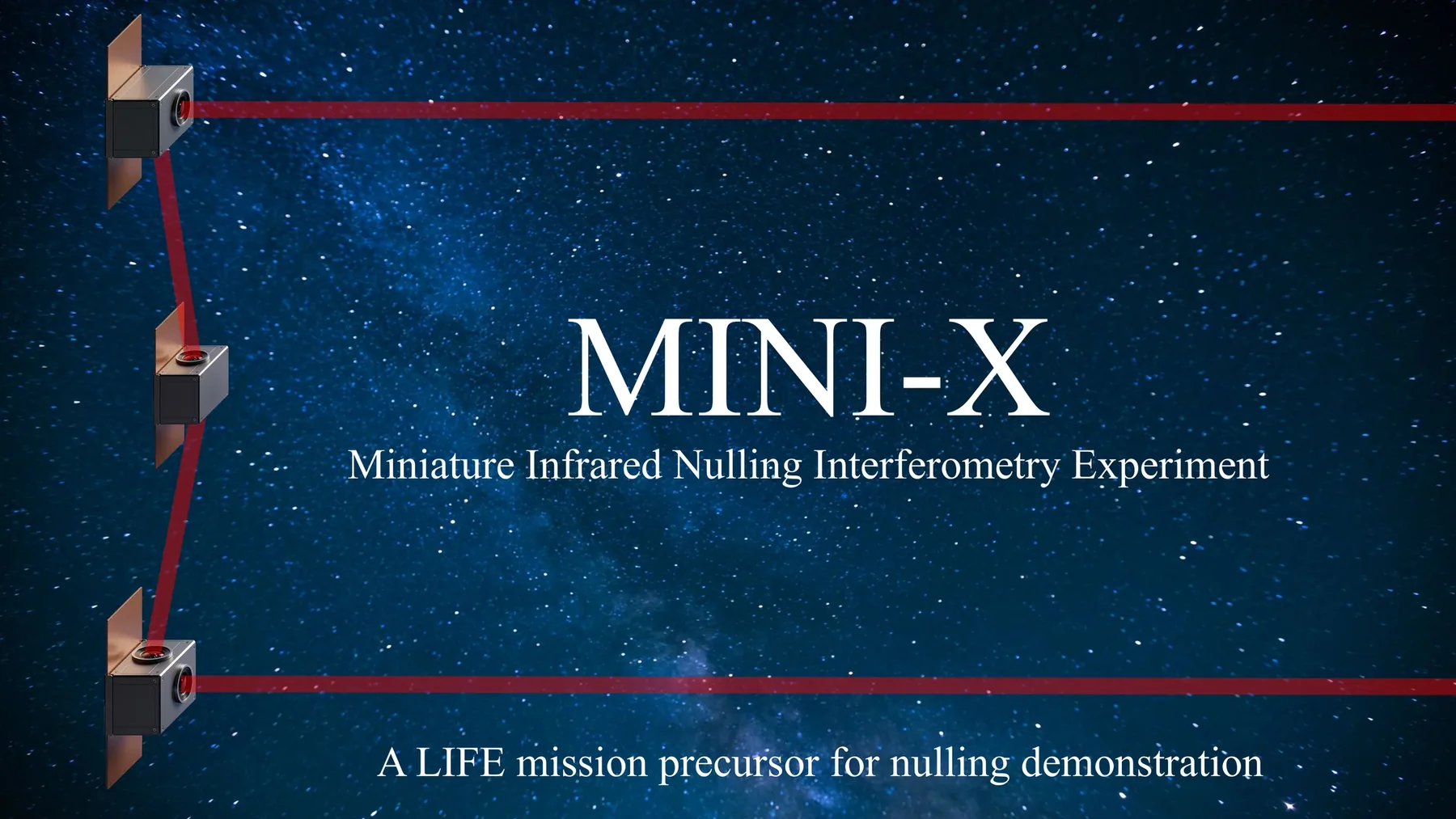
My MSc research on MINI-X studies formation dynamics and control for a smaller nulling-interferometer precursor related to the LIFE mission concept.
Citation
The Large Interferometer For Exoplanets (LIFE): The Case for a Large Mid-Infrared Space Mission
Sarah Rugheimer, Aiden Weatherbee, James Fecanin, Alistair Glasse, Paul Rimmer, Eleonora Alei, Esther Wang, Marrick Braam, Sascha P. Quanz, Adrian Glauser, et al. arXiv:2607.21683, 2026.
Connection to my research
MINI-X is a precursor study for LIFE.
My MINI-X work examines a smaller distributed-spacecraft architecture intended to demonstrate formation-flying and control concepts relevant to a future LIFE-class observatory.
Explore the MINI-X study